
Exploring the Shri Ramcharitmanas: Its Content and Benefits
RAMAYAN
Bhanu Pratap Shastri
Introduction to the Shri Ramcharitmanas
The Shri Ramcharitmanas is an esteemed text in Hindu literature, written by the poet-saint Tulsidas in the 16th century. This epic poem, composed in Awadhi, a dialect of Hindi, recounts the life and deeds of Lord Rama, a revered deity in Hinduism. Tulsidas aimed to create a work that would instill faith and devotion among the masses, allowing them to connect with the divine through the accessible medium of vernacular language.
Historically, the Shri Ramcharitmanas holds a significant place within Indian cultural and spiritual traditions, influencing countless generations. Tulsidas, inspired by the original Sanskrit epic, the Ramayana attributed to Valmiki, sought to present the story of Rama in a way that was relatable and comprehensible, thereby extending its reach beyond scholarly circles. The text is not merely a narrative; it encapsulates the ideals of dharma, devotion, and ethical living, all of which are intrinsic to Hindu philosophy.
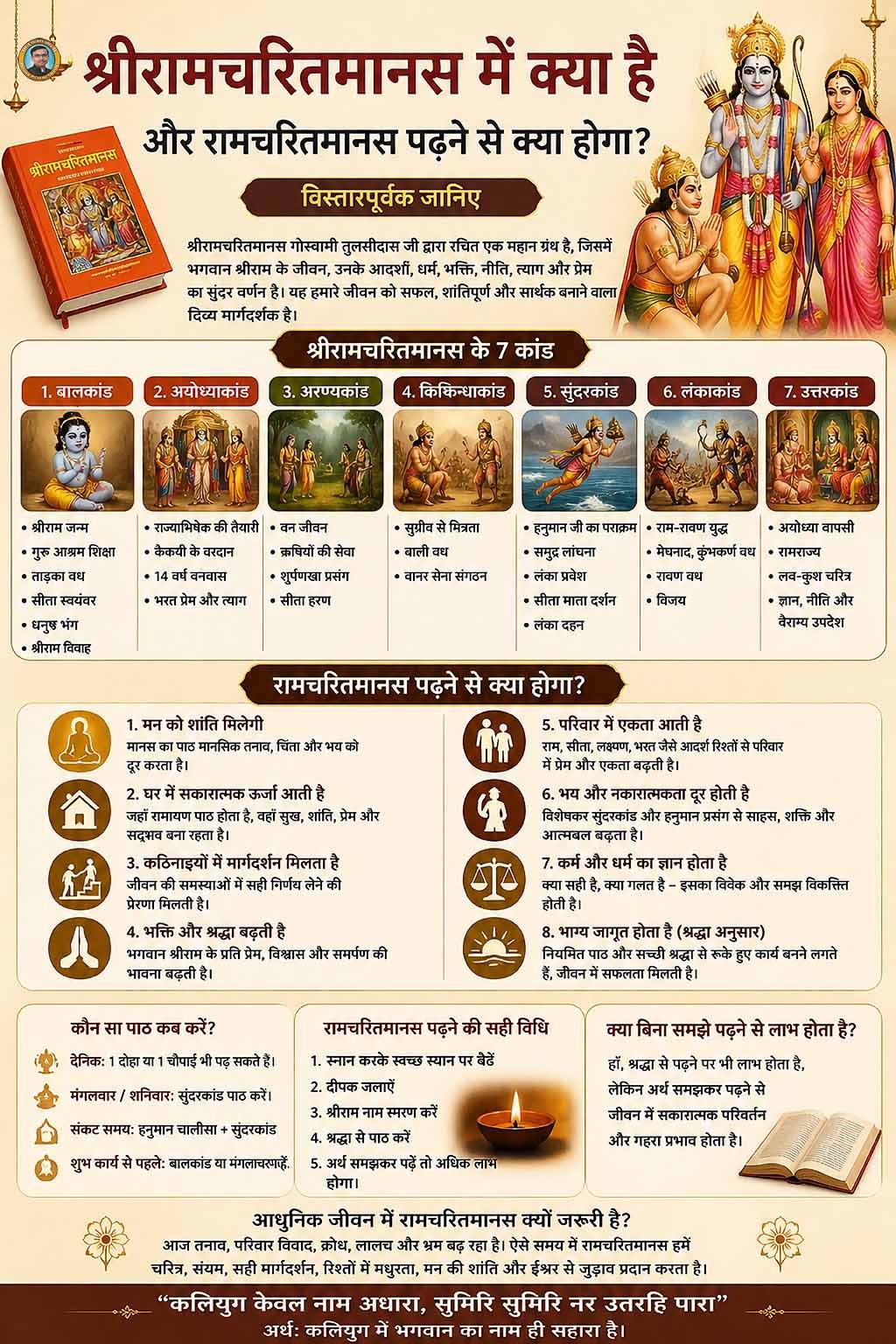
The story unfolds through seven Kands, or sections, detailing various aspects of Lord Rama's life, including his exile, the abduction of Sita, and the eventual victory over the demon king Ravana. The Shri Ramcharitmanas serves not only as a source of entertainment and cultural identity but also as a spiritual guide. Among its many benefits, the text inspires devotion and moral reflection, urging readers to embody the virtuous qualities of Lord Rama. The recited verses are often used in daily worship and communal gatherings, fostering a sense of unity and spiritual growth.
The Structure and Content of the Shri Ramcharitmanas
The Shri Ramcharitmanas, composed by the revered poet Tulsidas in the 16th century, is a significant text in Hindu literature that narrates the life and exploits of Lord Rama, a revered avatar of Vishnu. The text is organized into seven Kandas or books, each serving a distinct purpose, conveying various moral and spiritual lessons.
The first Kanda, Balakanda, introduces the birth of Lord Rama and describes his early life. This section sets the stage for the epic by establishing the divine nature of Rama and his family, including his father King Dasharatha, mother Kausalya, and brothers Lakshmana, Shatrughna, and Bharata. It emphasizes concepts such as dharma (righteousness) and the importance of devotion.
The Ayodhyakanda, the second Kanda, primarily details the events leading to Rama's exile. It illustrates the trials faced by his family due to the machinations of Queen Kaikeyi, resulting in Rama's departure to the forest. This part of the text highlights themes of sacrifice, honor, and the complexities of familial relationships.
The Aranyakanda, the third Kanda, portrays Rama's adventures in the forest alongside his wife Sita and brother Lakshmana. This Kanda introduces important characters such as the demoness Surpanakha and the sage Agastya. It serves to underline the virtues of courage and resilience amidst adversity.
The Kishkindhakanda follows, depicting the alliance between Rama and the monkey king Sugriva to locate Sita, who has been abducted by Ravana. This section promotes themes of friendship and loyalty. Next, the Sundarakanda focuses on Hanuman's journey to Lanka, showcasing his devotion and strength, which are integral to the narrative.
In the Yuddhakanda, the climactic battle between Rama and Ravana unfolds, emphasizing the decisive nature of good over evil. This Kanda is rich with action and moral confrontations, portraying Rama's strategic prowess and determination. Finally, the Uttarakanda concludes the epic, addressing the ramifications of Rama's rule and the trials he faces even after defeating Ravana, thus reinforcing that challenges persist regardless of triumph.
Throughout the Shri Ramcharitmanas, the interplay of good and evil, the significance of duty, and the power of devotion are conveyed through a vibrant tapestry of narratives and characters, providing readers with profound spiritual insights and guidance.
Philosophical Themes in the Shri Ramcharitmanas
The Shri Ramcharitmanas, a revered text in Hindu literature, is rich in its philosophical teachings, reflecting fundamental concepts such as dharma, karma, and devotion. At its core, the text underscores the significance of dharma, or righteousness, which is central to Hindu ethical and moral philosophy. The narratives present various characters who exemplify dharma through their actions and decisions, serving as timeless role models for individuals navigating the complexities of life. The portrayal of Lord Rama, the protagonist, encapsulates the ideal of dharma, displaying virtues of truth, justice, and moral integrity.
Karma, another pivotal theme, illustrates the principle of action and its consequential outcomes. The text conveys that every action has a reaction, emphasizing personal accountability and the importance of performing one's duty without attachment to the results. Through the stories of both divine and mortal characters, readers are reminded that what one sows, one ultimately reaps. This concept encourages individuals to engage in righteous actions and ethical decision-making, promoting a harmonious and moral society.
Furthermore, devotion or bhakti is a foundational theme interwoven in the narrative structure of the Ramcharitmanas. The text emphasizes the significance of a devoted, loving relationship with the divine, encouraging believers to cultivate their faith through prayer and worship. Bhakti is portrayed not merely as worship but as a path to transcendence, guiding individuals toward spiritual realization. In contexts where moral dilemmas and personal struggles arise, the principles of dharma, karma, and devotion provided in the Ramcharitmanas foster guidance and introspection, holding relevant implications for daily life.
Spiritual Benefits of Reading the Shri Ramcharitmanas
The Shri Ramcharitmanas, composed by the revered saint Tulsidas, not only stands as a literary masterpiece but also serves as a profound spiritual guide. One of the primary benefits of reading this text is the fostering of devotion. Throughout its verses, devotees are inspired to connect with Lord Rama, who embodies virtues such as righteousness, compassion, and duty. This connection often inspires a deeper sense of faith and helps individuals cultivate spiritual devotion in their daily lives.
Another significant advantage of engaging with the Shri Ramcharitmanas is its ability to reduce stress and promote mental tranquility. In today’s fast-paced world, many individuals experience anxiety and emotional turmoil. The recitation of the Ramcharitmanas allows readers to immerse themselves in its soothing narratives, promoting a sense of calm and peace. Many have testified that regular reading provides solace during challenging times, alleviating worries and fostering a balanced mindset.
The text is also renowned for imparting moral and ethical guidance. The various tales within the Shri Ramcharitmanas showcase the importance of virtues such as honesty, integrity, and respect. These stories not only provide moral lessons but also encourage individuals to reflect on their own lives, aligning their actions with higher ethical standards. Through its teachings, readers often find themselves inspired to pursue personal growth and moral fortitude.
Lastly, engaging with the Shri Ramcharitmanas enhances one's spiritual knowledge, offering insights into dharma, karma, and the nature of life. The philosophical undertones present within Tulsidas’s verses encourage introspection and self-discovery. As readers delve deeper into the text, they often uncover layers of understanding that contribute to their spiritual evolution. In this way, the Shri Ramcharitmanas serves not merely as a book, but as a pathway to spiritual enlightenment and growth.
Practical Ways to Incorporate the Shri Ramcharitmanas into Daily Life
Incorporating the Shri Ramcharitmanas into daily life can greatly enrich one’s spiritual journey. Here are several practical approaches to integrate the reading of this revered text into everyday routines.
First, setting aside dedicated reading time can be beneficial. Identifying a specific time each day, such as early morning or before bedtime, allows individuals to cultivate a habitual practice. During this time, individuals can read a chapter or a few verses from the Shri Ramcharitmanas, allowing the teachings to resonate throughout their day. Consistency is key, as this regular practice fosters a deeper connection with the text.
Additionally, participating in group readings can enhance the experience. Consider organizing a weekly or monthly gathering with family or friends. This communal approach allows for shared insights and discussions on various interpretations and meanings of the verses. Group readings not only create a supportive environment but also foster a sense of community and shared devotion.
For those looking to reflect personally, specific verses from the Shri Ramcharitmanas can serve as powerful meditative focal points. Selecting a verse that resonates personally or reflects current life challenges can facilitate deeper introspection. Spending a few minutes meditating on the meaning of these verses can offer clarity and guidance, transforming reading into a practical tool for personal growth.
Moreover, using technology can aid in maintaining this practice. Many applications are available that feature daily verse notifications or audio readings of the Shri Ramcharitmanas, making it easier for individuals to engage with the text amidst their busy lives.
In conclusion, integrating the reading of the Shri Ramcharitmanas into daily life through dedicated time, group interactions, reflective meditation, and the use of technology can greatly enhance spiritual understanding, making the teachings more accessible and applicable in a modern context.
Comparative Analysis with Other Hindu Texts
The Shri Ramcharitmanas, composed by Tulsidas in the 16th century, stands as a significant work in Hindu literature. It narrates the life and virtues of Lord Rama, elevating the Ramayana to a more accessible poetic form that resonates deeply within the cultural fabric of India. When compared to other prominent Hindu texts, such as the original Ramayana attributed to Valmiki and the Bhagavad Gita, one can observe distinct differences and complementary elements that highlight the richness of Hindu thought.
Valmiki's Ramayana serves as the original epic that details the life of Rama, encompassing the broader narrative landscape, including the events leading to his birth, his exile, and the ultimate battle against Ravana. In contrast, the Shri Ramcharitmanas focuses primarily on Rama's virtues, emphasizing dharma (righteousness) and devotion. This accessibility makes it popular among various strata of society, fostering a wider spiritual engagement.
On the other hand, the Bhagavad Gita offers a philosophical discourse situated within the Kurukshetra battlefield. It delves into themes of duty, righteousness, and the nature of the self, making it foundational for those who seek a deeper understanding of life's moral dilemmas. While the Gita addresses the complexities of life and personal responsibility, the Shri Ramcharitmanas simplifies the ideals associated with Lord Rama, presenting him as the epitome of virtue.
Furthermore, the Shri Ramcharitmanas can be seen as a devotional text that intertwines everyday life with spiritual principles, attracting those seeking to cultivate bhakti (devotion). Its poetic nature allows for enhanced memorization and recitation, a feature that complements the philosophical depth found in both the Ramayana and the Bhagavad Gita. Together, these texts enrich the understanding of Hindu philosophy, creating a multidimensional tapestry that continues to inspire millions.
Conclusion: The Timeless Relevance of the Shri Ramcharitmanas
The Shri Ramcharitmanas, composed by Tulsidas in the 16th century, continues to resonate with readers across generations. This profound scripture encapsulates the essence of dharma, emphasizing the virtues of love, devotion, and righteousness through its detailed narrative of Lord Rama's life. The epic not only serves as a spiritual guide but also addresses the moral dilemmas and ethical challenges faced by individuals in their daily lives.
Throughout this exploration of the Shri Ramcharitmanas, we have uncovered its multifaceted components—from its narrative structure to the philosophical and spiritual messages embedded within its verses. The text promotes values such as compassion, humility, and devotion, which are universally relevant. The principles illustrated through the characters, particularly Lord Rama, Sita, and Hanuman, inspire individuals to embody these ideals in real-life situations.
The relevance of the Shri Ramcharitmanas extends beyond its cultural and religious significance; it serves as a mirror reflecting human emotions and relationships. Its poetic beauty, rich symbolism, and relatable themes offer wisdom that can aid in personal growth and self-reflection. Readers are encouraged to immerse themselves in its verses, facilitating not only a deeper understanding of the narrative but also fostering spiritual awakening.
In light of the teachings found within the Shri Ramcharitmanas, it is vital for individuals to engage with this timeless text. By doing so, one can derive invaluable lessons that resonate with contemporary life challenges. The eternal wisdom contained within its stanzas urges us to reflect upon our own lives, motivating us to strive for a path of virtue and moral fortitude. Thus, exploring the Shri Ramcharitmanas can profoundly enhance one's spiritual journey and personal development.

Follow Us
If you are looking for a solution to any problem or need astrological guidance regarding your life, then contact us !
Quick Links
Help
© 2025. All rights reserved. Shastriji Online
Contact
+919999750511
bpshastrijee@gmail.com